
Fashion Business Trends
Change is a constant in the Fashion business. Companies that can not adapt do not often survive.Satisfying the Changing Consumer Market
Today's consumers are more discriminating and have less time to shop.They want unique products, instant convenience, better quality and a lower price.
Fashion companies must understand consumer thinking and be flexible enough to meet their needs.
Major Characteristics of today's consumers

Optimism. Consumers that Gerzema and D'Antonio classify as "spend shifters"—55 percent of Americans, based on their research—are optimistic and resilient. They still believe in opportunity and good things to come. That means they don't want to go overboard with second-hand shopping or "radical frugality;" instead, they simply seek value for their money
Brand consciousness. While the new consumer isn't chasing the ever-changing retail trends, they're often drawn to brands known for providing value. That's partly because they have so many choices, and it's hard to know what to trust. So if they're presented with the option of spending a little more for a brand that they know they'll like, they'll probably do that.
Authenticity-seekers. Benett and O'Reilly point to the "slow food" movement, where people strive to enjoy their meals instead of rushing through them, along with the related "slow travel" movement. The relatively new concepts of "voluntourism" and "staycations" suggest " a desire for a more ethical and sustainable approach to consumption—and life," the authors write.
Purpose-driven. "There is a pervasive sense that consumerism needs to be tempered by a thoughtful awareness of its negative social and personal implications," say Benett and O'Reilly. That's why people want to focus on simpler pleasures, such as homemade soup and lazy afternoons, instead of marathon shopping sprees that lead to clutter and constant feeling of wanting more. The authors point to books and blogs and urge people to simplify their lives. Their own research found that most respondents enjoyed cutting back and decluttering their homes.
Mature. Instead of delaying adulthood, young adults are now increasingly likely to embrace responsibility and a more mature lifestyle, the authors of Consumed report. Compared with their parents and grandparents, twentysomethings are "even more focused on achieving their goals and attaining their dreams," Benett and O'Reilly say. The stereotype of "Peter Pan" types who don't want to grow up, as showcased in movies such as 2006's Failure to Launch, has become outdated.
Cross-shopping:
The consumer trend of combining purchases from both ends of the price scale.Consumers express their individual style instead of following fads.
Gift cards are on the increase.
Demographics and Psychographics

These provide important market information.
• single heads of households
• trends in later parenthood
• Children and teens
• the mature market
• cocooning
• ethnic and cultural shifts
Niche Marketing

The changing consumer market has lead to the creation of many market segments. Microsegmentation is the dividing of an industries total market in to narrow target markets.
THE INTERNET
Database Research for Niche Marketing
Information gathering about potential customers. Can identify not only age, gender and income, but shopping patterns, preferred activities and product style preferences.• focus groups
• surveys
• tracking buying
• internet information gathering
Fashion forecasting and market research are occurring at the retail level and moving backward through the chain to get the right products to market.
Trends in Retail Formats
Discount Retailing
Buying Clout - big retailers use their power to get discounts from their suppliersCharge-backs - penalties or claims against vendors, for damaged merchandise or not following rules
Category management - customizing product groups on a store to store basis
Nonstore Retailing
• Internet• Direct mail
• TV
Multichannel Retailing
Survival Business Strategies
Horizontal Restructuring
Consolidation - Uniting two or more parts into one. Often accomplished through aquisitions, take-overs and mergers• Aquisition - one company purchases another and gains controlling interest.
• Take over - a change in the controlling interest of a company. It may be friendly or hostile. Hostile takeovers often destroy companies.
• Merger - the joining of two companies to create a new one
• Downsizing - the reduction of the size of a business to reduce cost and become more efficient.
• Bankruptcy - companies can restructure under Chapter 11 or can liquidate and go out of business
Vertical Restructuring
• outlets• private labels
• in house manufacturing
Supply Chain Collaboration
Employee Recruitment and Training
Customization through Technology
Agile Manufacturing
E-Retailing
Examples of Mood Boards


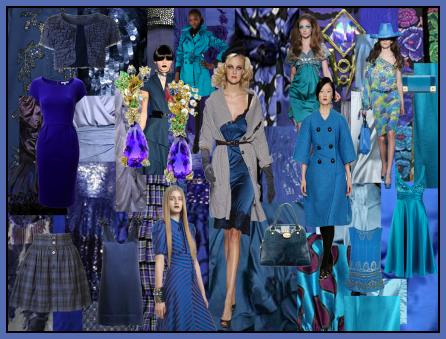


Homework: Final Board Due Monday, November 19 - this is a two week project
HOMEWORK: Create a Mood Board for a store or designer of your choosing. This should NOT consist just of pictures of their clothing. It should include other images - photographs, color swatches, images from nature, etc - that express their Brand Image.It should cover the entire board. (No larger than 11x14) There should be no, or very little empty unused space.
Students applying for the Urban Outfitters internship should create their board for that purpose.
Due Monday, November 12 -
Write a one paragraph analysis of the store that you are making the board for. Talk about brand image and target customer.Bring in 10-20 images or articles that you plan to use in your mood board.
Bring a copy of your resume
Read: Chapter 25 in the textbook
